
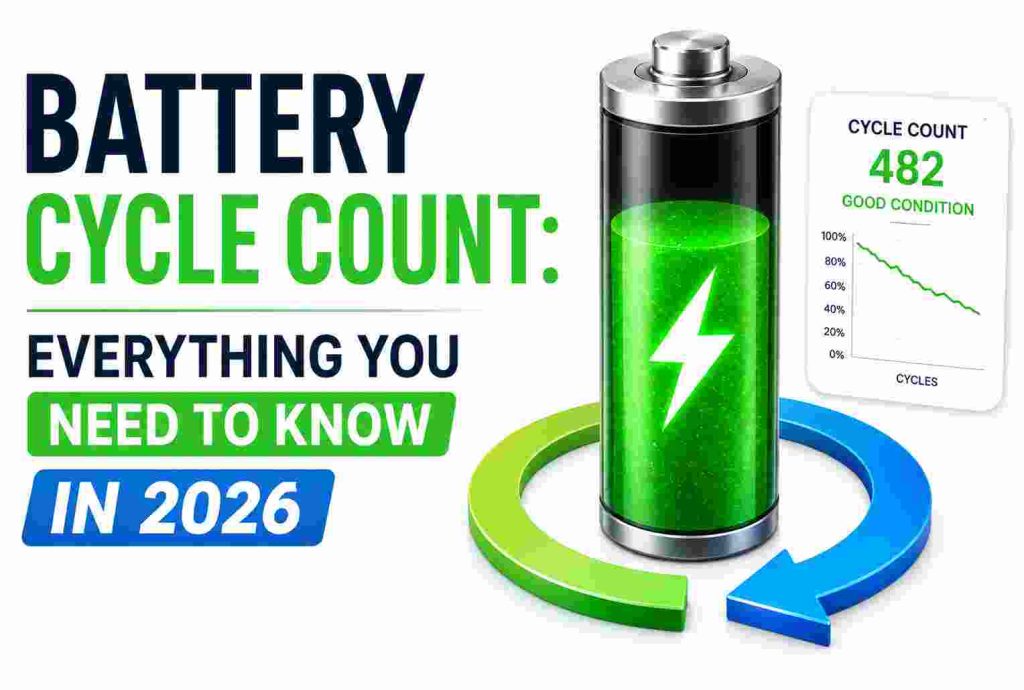
Smartphone batteries have improved significantly over the years, but battery performance still declines with regular use. One of the most important metrics used to measure battery lifespan is the Battery Cycle Count.
Whether you’re planning to keep your phone for several years, monitor its battery health, or prepare to sell old phone online, understanding battery cycle count can help you make informed decisions about your device.
In this guide, we’ll explain what battery cycle count is, how it affects battery performance, how to check it, and why buyers pay attention to it in 2026.
What Is Battery Cycle Count?
A Battery Cycle Count refers to the number of complete charge-discharge cycles a battery has gone through during its lifetime.
A cycle is not necessarily one full charge from 0% to 100%.
For example:
Charging from 50% to 100% uses half a cycle.
Charging from 25% to 75% uses half a cycle.
Two half cycles equal one complete battery cycle.
Manufacturers use battery cycle count as an indicator of battery wear and overall battery health.
Why Battery Cycle Count Matters
Every rechargeable lithium-ion battery has a limited lifespan. As the cycle count increases, the battery gradually loses its ability to hold its original capacity.
A higher battery cycle count may result in:
1.Reduced battery life
2.Faster battery drain
3.Increased charging frequency
4.Lower device performance
5.Reduced resale value
This is why smartphone buyers often check battery cycle count before purchasing a used device.
Typical Battery Lifespan in 2026
Most modern smartphone batteries are designed to retain approximately 80% of their original capacity after:
1.500 to 1,000 charge cycles for standard smartphones
2.1,000+ cycles for premium flagship devices
3.Up to 2,000 cycles for some advanced battery technologies
The actual lifespan depends on charging habits, temperature, usage patterns, and battery quality.
Battery Cycle Count vs Battery Health
Many people confuse battery cycle count with battery health.
Battery Cycle Count
Measures how many charging cycles the battery has completed.
Battery Health
Measures how much capacity remains compared to when the battery was new.
For example:
Battery Cycle Count | Battery Health |
100 Cycles | 98% |
300 Cycles | 92% |
600 Cycles | 85% |
900 Cycles | 78% |
Generally, higher cycle counts lead to lower battery health, though usage habits also play a major role.
How to Check Battery Cycle Count
On iPhone
Recent iPhone models allow users to view battery cycle information directly through settings.
Navigate to:
Settings → Battery → Battery Health
Some newer devices provide cycle count information directly.
On Android
Battery cycle count availability depends on the manufacturer.
Options include:
Built-in diagnostic menus
Device health applications
Manufacturer service tools
System diagnostic reports
Brands like Samsung, OnePlus, Xiaomi, and Google may offer battery diagnostics through support or device care applications.
What Is Considered a Good Battery Cycle Count?
Here is a general guideline:
Excellent
Below 300 cycles
Good
300–500 cycles
Fair
500–800 cycle
Poor
Above 800 cycles
A phone with a lower cycle count generally commands a better resale value.
How Battery Cycle Count Affects Resale Value
If you plan to sell phone online, battery condition is one of the most important factors buyers evaluate.
A smartphone with:
1.Low cycle count
2.High battery health
3.Original battery
4.Good charging performance
will usually receive a higher valuation.
Many buyers compare battery health alongside specifications, cosmetic condition, and storage capacity before making a purchase.
If you’re planning to sell old phone online, checking the battery cycle count beforehand can help you understand the expected resale value.
Tips to Reduce Battery Cycle Wear
Although battery aging is inevitable, proper charging habits can slow the process.
Avoid Extreme Temperatures
Heat is one of the biggest causes of battery degradation.
Use Original Chargers
Certified chargers help maintain optimal charging performance.
Avoid Frequent Full Discharges
Keeping your battery between 20% and 80% can reduce long-term wear.
Enable Battery Optimization Features
Modern smartphones include intelligent charging systems that protect battery health.
Remove Heavy Background Apps
Reducing unnecessary power consumption minimizes charging frequency.
Battery Cycle Count and Phone SAR Value
When evaluating a smartphone, users often focus on battery health while also checking the phone SAR value.
Phone SAR value (Specific Absorption Rate) measures the amount of radiofrequency energy absorbed by the body when using a mobile device.
While battery cycle count indicates battery wear, SAR value relates to radiation exposure standards. Together, they provide a more complete picture of a smartphone’s condition and safety profile.
When purchasing a used device, checking both battery health and phone SAR value can help buyers make a more informed decision.
Signs Your Battery May Need Replacement
You may need a battery replacement if you notice:
1.Rapid battery drain
2.Unexpected shutdowns
3.Excessive heating
4.Slow charging
5.Battery swelling
6.Battery health below 80%
In many cases, replacing the battery can significantly extend the life of your smartphone.
Why Battery Cycle Count Is More Important Than Ever in 2026
With smartphones becoming more expensive, users are keeping devices longer than before. As a result, battery health has become a critical factor in both ownership and resale decisions.
Whether you’re buying a used smartphone or preparing to sell old phone online, battery cycle count provides valuable insight into the condition of the device.
As the second-hand smartphone market continues to grow, battery cycle count is becoming one of the most trusted indicators of long-term performance and value.
Conclusion
Understanding Battery Cycle Count is essential for anyone who owns a smartphone in 2026. It helps measure battery wear, predict future performance, and determine resale value.
A lower cycle count generally means better battery health, longer battery life, and a higher selling price. If you’re planning to sell phone online or sell old phone online, knowing your battery cycle count can help you secure a better deal.
Combined with factors such as device condition, battery health, and phone SAR value, battery cycle count offers a clear picture of your smartphone’s overall quality and lifespan.